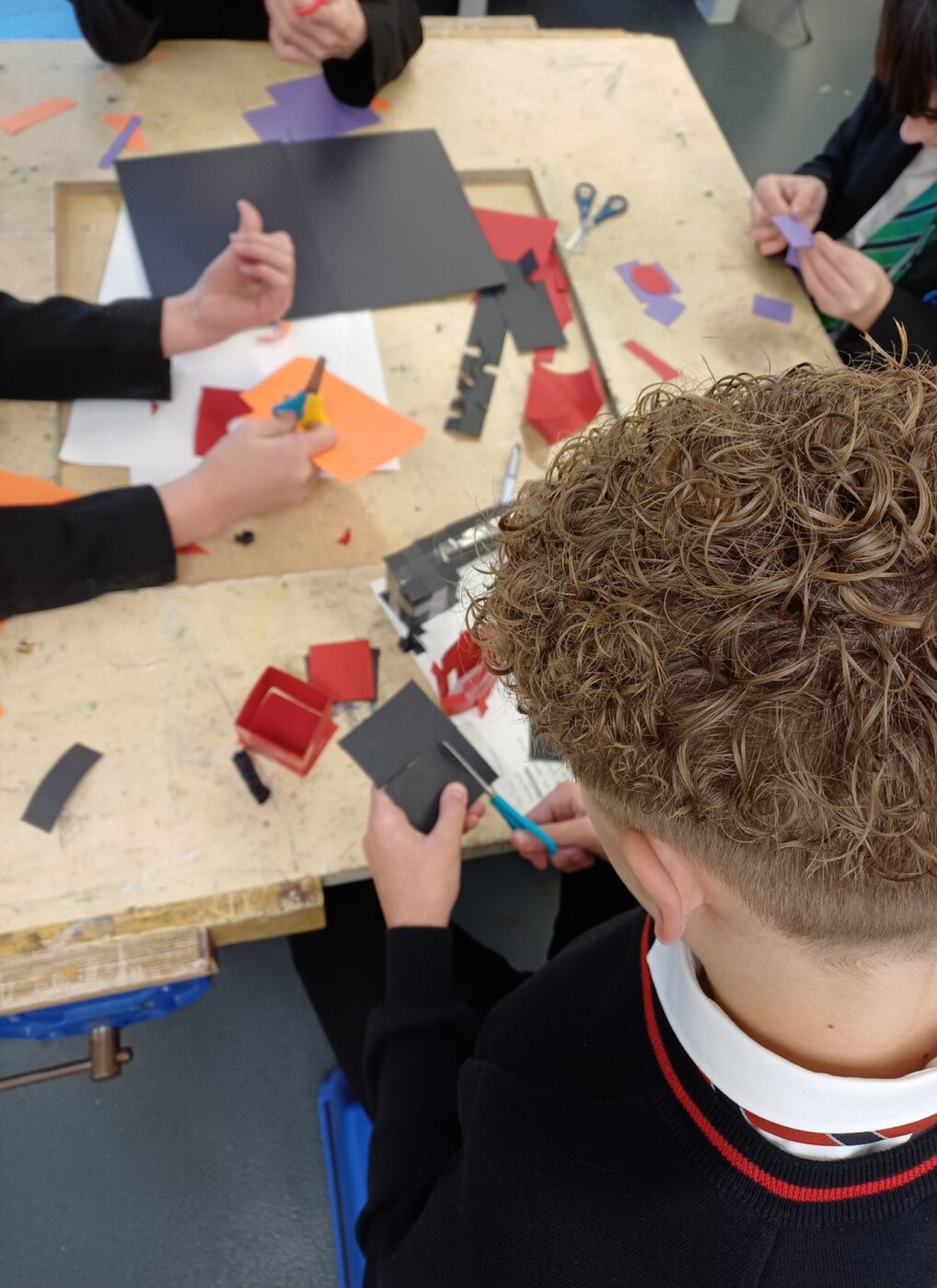
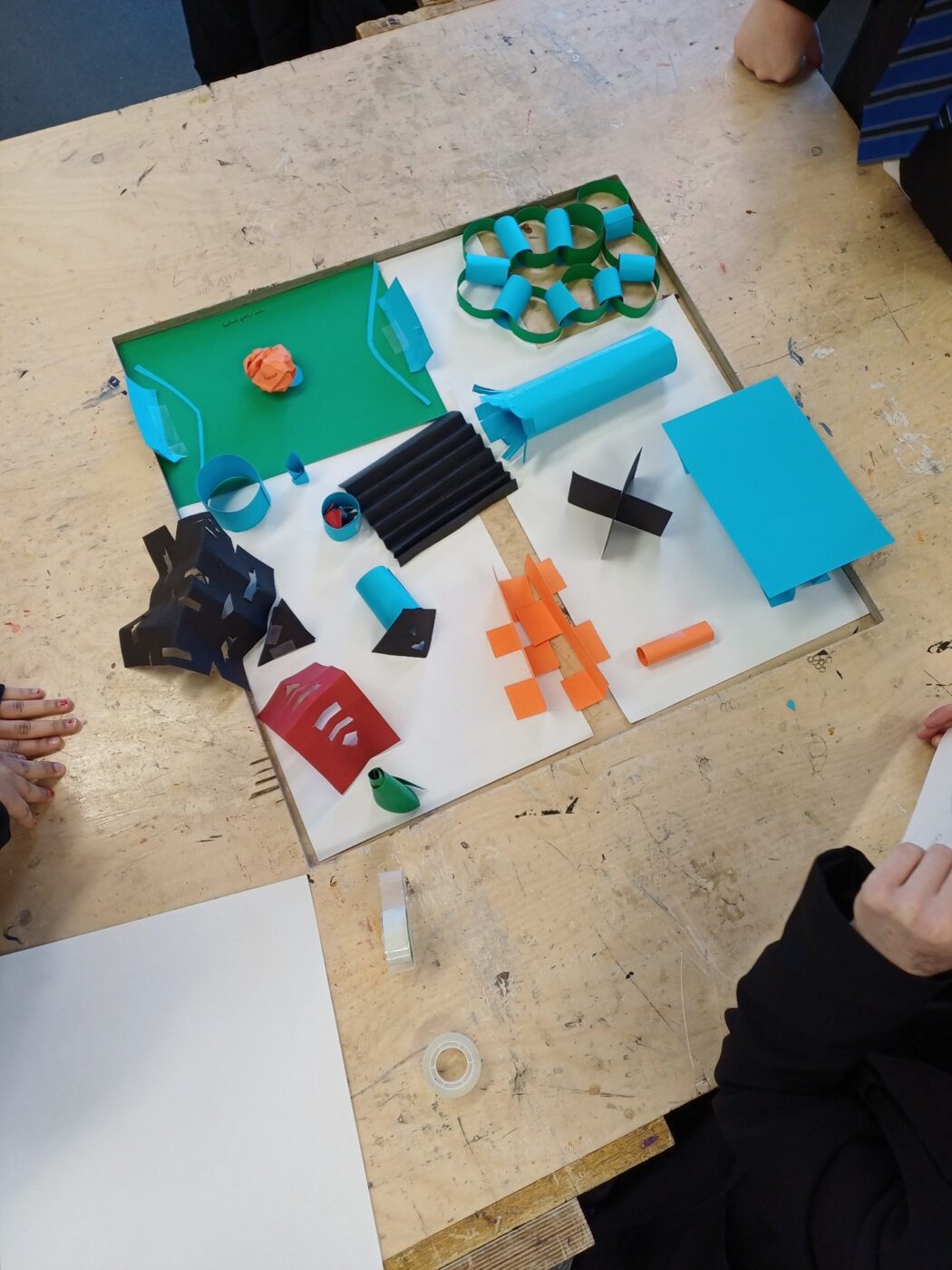
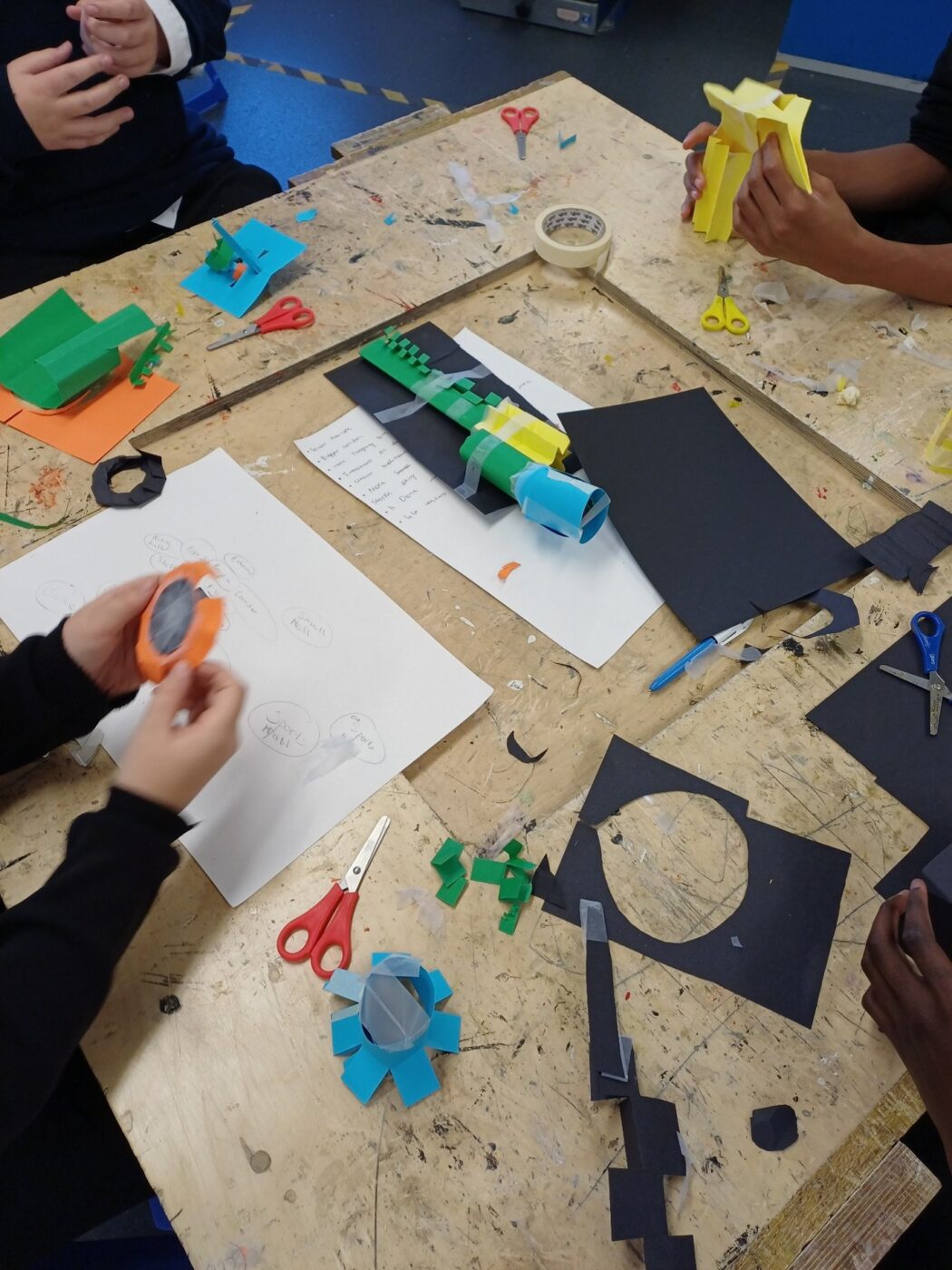
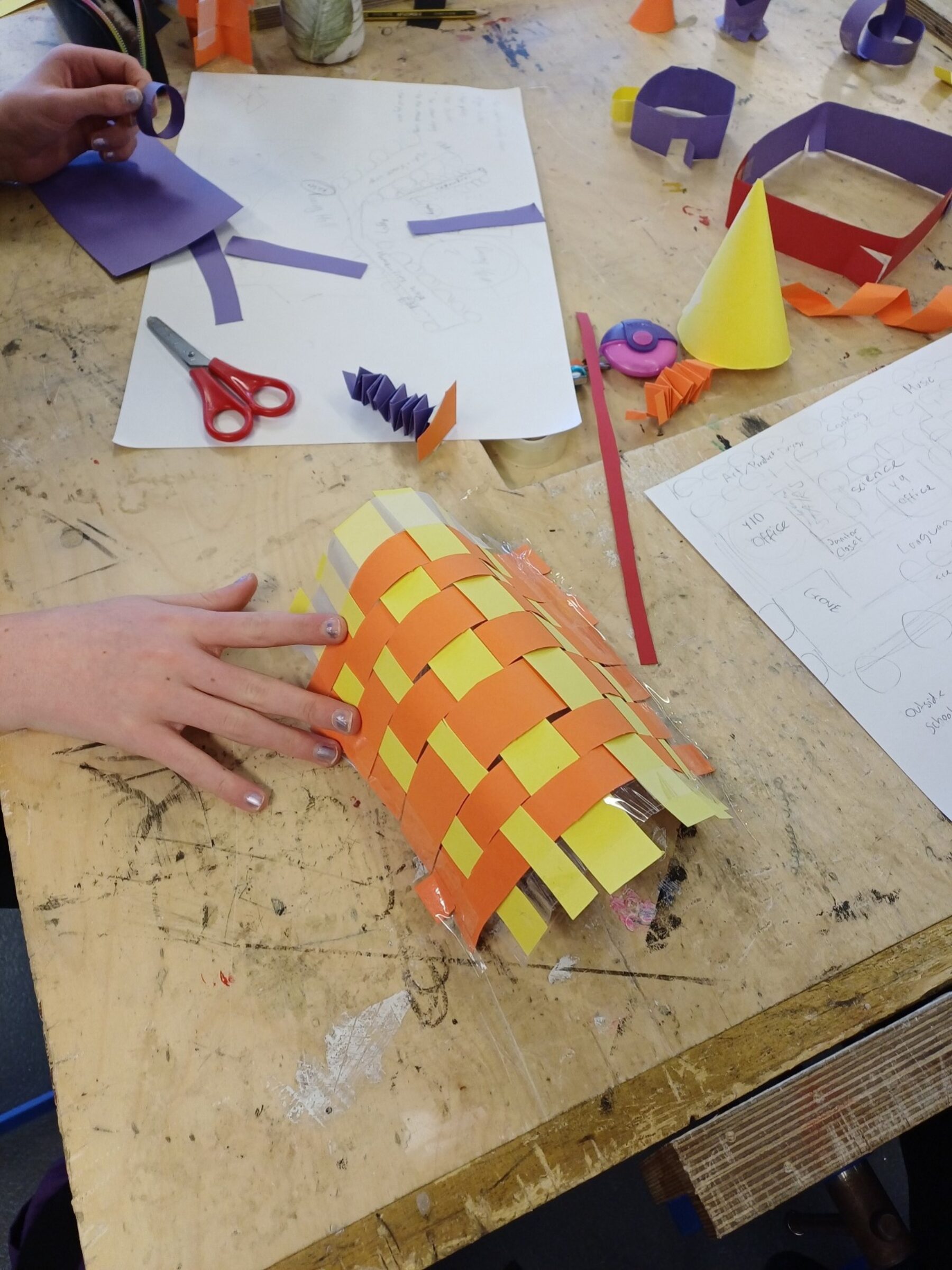
During the workshop we explored the existing school building through the eyes of the students. They discussed where spaces feel crowded or confusing, areas that don’t support concentration, and routes through the school that make movement difficult. These conversations quickly revealed something powerful: young people have an acute understanding of how their environment affects their wellbeing and learning.
From there, the students became designers. They sketched their ideas, rethought problem areas, and constructed models that expressed their ideas in three dimensions. Through this process, they experienced how architectural decisions—light, circulation, scale, and spatial organisation—shape daily life.
The workshop wasn’t just about models or drawings; it was about the power to influence change. By giving students the tools to critique and reimagine their surroundings, we helped highlight an essential principle of social value in design: the built environment is not static. It can be adapted, questioned, and improved by the people who use it.
Encouraging young people to engage critically with the spaces around them fosters confidence and long-term community advocacy. When students realise their voices can influence design, they carry that expectation into future workplaces, neighbourhoods, and civic conversations. They begin to understand that thoughtful, inclusive design is not a luxury—it’s a responsibility.
We were inspired by the enthusiasm of the Orchard School students. Their ideas show that meaningful social value begins with simple steps: inviting people into the conversation and giving them the tools to shape the spaces they rely on every day.
We value the importance of working with local schools, colleges and charities and are always looking for new partnerships within the community, please get in touch…